Batters spend hours trying to pick the googly at release when the skill that actually keeps them in is playing late off the surface.
Reading a wrist spinner out of the hand is overrated as an ambition
There is a particular kind of praise reserved for batters who can pick a wrist spinner from the hand. It is spoken of as a gift, and occasionally as a moral quality, as though the batter who cannot see the seam rotation at release has simply not worked hard enough. Some players genuinely have it. Most who claim it are guessing correctly more often than average and remembering the good days.
I would not build a plan around acquiring it.
The physics are against you. The ball leaves the hand at the far end of a twenty two yard pitch, and the window in which the wrist and the seam are visible is a few hundredths of a second, at an angle, often against a crowd or a sightscreen with an advertisement painted on it. The information is there. Extracting it reliably, in a Test match, under pressure, in fading light, is a very thin edge to depend on.
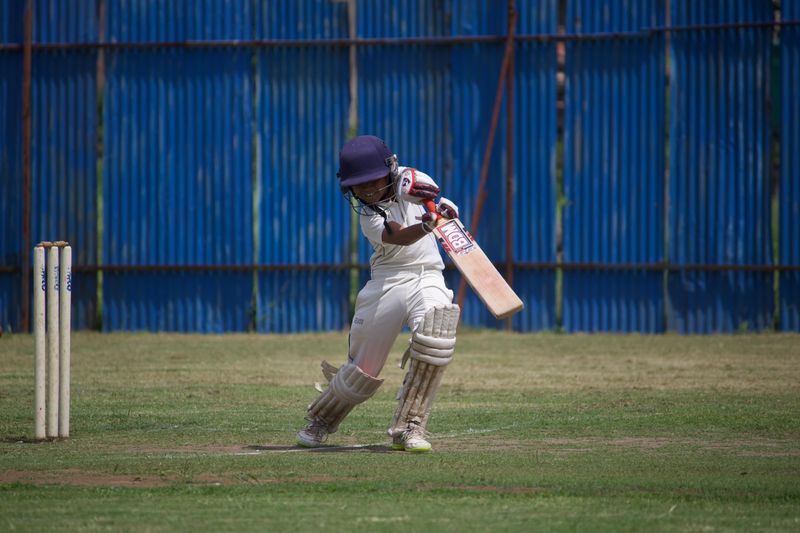
What survives all those conditions is playing the ball late. Watching it off the pitch, letting it come to you rather than committing the front foot early, and having a defensive method that works whether the ball spins in or away, because the bat is coming down beside the pad rather than across the line. A batter with that method does not need to know which delivery it was. That is the entire point.
The batters I have seen handle high quality leg spin best over long periods were not the great pickers. They were the ones with the deepest crease position and the calmest hands, who used the depth of the crease to convert a good length into a back-of-a-length ball and let the spin happen in front of them.
The counterargument is real in the shortest format. If you have to attack, you must commit early, and committing early means guessing, and guessing correctly requires reading the hand. Fine. That is a specific job in a specific context and it is worth training.
In four-day and five-day cricket, though, the batter who is trying to pick every ball is spending attention on a task with a poor return, and attention is finite.
Watch the ball longer. It is not a coaching cliche just because it appears on posters.
How did you feel about this article?
Related Articles